Science · Secretagogue & Regulatory
Research class
Secretagogue & Regulatory
Compounds studied in relation to endocrine signaling and metabolic regulation. The class holds the growth-hormone-releasing-hormone analogs, receptor secretagogues, an acylated amylin analog, and two small-molecule metabolic cofactors — making it the most chemically diverse group in the collection.
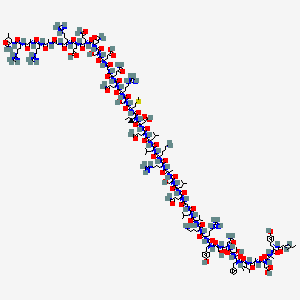
22
Compounds
258 – 5136
Molecular weight (g/mol)
9 / 22
Verified identifiers
Compounds in this class
Each has a full monograph: verified identifiers, sequence, and analytical properties.
Tesamorelin
C221H366N72O67S · 5135.86
MOTS-c
C101H152N28O22S2 · 2174.62
Ipamorelin
C38H49N9O5 · 711.87
AOD-9604
C78H123N23O23S2 · 1815.10
Cagrilintide
C194H312N54O59S2 · 4409.07
Glutathione
C10H17N3O6S · 307.32
CJC-1295
C152H252N44O42 · 3367.95
5-Amino-1MQ
C10H11IN2 · 286.12
NAD+
C21H27N7O14P2 · 663.43
Hexarelin
C47H58N12O6 · 887.04
GHRP-2
C45H55N9O6 · 817.98
GHRP-6
C46H56N12O6 · 873.02
Kisspeptin-10
C63H83N17O14 · 1302.44
SLU-PP-332
C18H14N2O2 · 290.32
Adipotide
C111H204N36O28S2 · 2555.21
IGF-1 LR3
C400H619N111O115S9 · —
Sermorelin
C149H246N44O42S · 3357.93
Amlexanox
C16H14N2O4 · 298.29
B7-33
C131H229N41O36S · 2986.58
Pancragen
C26H36N6O9 · 576.61
Gonadorelin
C55H75N17O13 · 1182.31
AICAR
C9H14N4O5 · 258.23
Shared chemistry
This class contains the site's most heavily modified molecules: acylation, disulfide bridging, and C-terminal amidation all appear here.
AcylationTesamorelin (hexenoyl); Cagrilintide (eicosanedioyl-γ-Glu)
Disulfide bridgeCagrilintide, AOD-9604
Small moleculesNAD+, Glutathione, 5-Amino-1MQ
People also ask
What are secretagogue and regulatory compounds?
They are a research grouping of compounds studied in relation to endocrine signaling and metabolic regulation. The name describes the research context, not an established effect or use, and every member is supplied for laboratory research only.
Why does this class include small molecules and not only peptides?
Because the grouping is defined by research context rather than by molecular type. Alongside the peptides it holds two small-molecule metabolic cofactors — NAD+ and glutathione — and the small heterocycle 5-Amino-1MQ, which is why the members range from large modified peptides down to simple small molecules.
What is peptide acylation?
Acylation is the attachment of a fatty-acid or lipid chain to a peptide, usually through a short linker. In this grouping Tesamorelin carries a hexenoyl group and Cagrilintide carries an eicosanedioyl chain attached through a γ-Glu linker. It is described here purely as a structural modification.
What is a GHRH analog?
A GHRH analog is a peptide whose sequence is modeled on growth-hormone-releasing hormone. Tesamorelin and CJC-1295 are the GHRH analogs in this grouping; the term is a structural-family descriptor and carries no statement about activity or use.
What is a disulfide bridge?
A disulfide bridge is a covalent bond between two cysteine side chains that stabilizes a peptide's folded shape. Cagrilintide carries a Cys3–Cys8 disulfide and AOD-9604 also contains a disulfide bond; both are described here by structure only.
Are these compounds approved for human or veterinary use?
No. Every compound grouped here is supplied For Research Use Only — not for human or veterinary use. The materials are not drugs, foods, cosmetics, or medical devices and must not be administered to humans or animals.
Data & tools
Peptide fundamentals
Analytical data & tools
Explore
Related reading


Other research classes
Research professionals only
From the class to the bench
Every compound in this class has a full monograph and a per-lot certificate. Pricing and ordering open for verified research professionals.