Science · Regenerative & Cytoprotective
Research class
Regenerative & Cytoprotective
Compounds studied in the context of tissue repair, cytoprotection, and wound-healing pathways. Structurally the class is unusually wide — it spans a tripeptide of 342 Da (KPV) to a 43-residue polypeptide of nearly 5,000 Da (TB-500) — so the grouping is defined by the research context, not by a shared scaffold.
17
Compounds
333 – 5358
Molecular weight (g/mol)
7 / 17
Verified identifiers
Compounds in this class
Each has a full monograph: verified identifiers, sequence, and analytical properties.
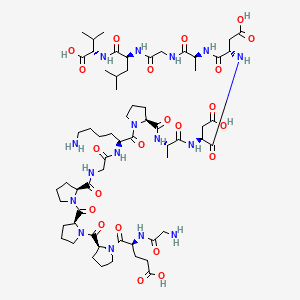
BPC-157
C62H98N16O22 · 1419.56
TB-500
C212H350N56O78S · 4963.51
GHK-Cu
C14H24CuN6O4 · 403.93
KPV
C16H30N4O4 · 342.44
Thymosin Alpha-1
C129H215N33O55 · 3108.32
SS-31
C32H49N9O5 · 639.80
ARA-290
C51H84N16O21 · 1257.32
Larazotide
C32H55N9O10 · 725.85
Follistatin-344
— · —
LL-37
C205H340N60O53 · 4493.34
Cartalax
C12H19N3O8 · 333.30
Bronchogen
C18H30N4O9 · 446.45
Prostamax
C20H33N5O9 · 487.51
Livagen
C18H31N5O9 · 461.47
Thymulin
C33H54N12O15 · 858.86
ACE-031
— · —
FOXO4-DRI
C228H388N86O64 · 5358.20
Shared chemistry
Two structural features recur across this class and both are visible on the compound pages: metal coordination and fragment-derived sequences.
Metal complexGHK-Cu — Cu(II) coordinated tripeptide
Fragment-derivedTB-500, Thymosin α-1 — thymosin-derived
Modified terminusARA-290 — N-terminal pyroglutamate
People also ask
What are regenerative and cytoprotective peptides?
They are a research grouping of peptides studied in tissue-repair, matrix-biology, and cytoprotection models. The name describes the research context these compounds appear in, not any established biological effect, mechanism, or use. Each is supplied for laboratory research only.
Why do the peptides in this class differ so much in size?
Because the grouping is defined by research context rather than a shared molecular scaffold. Members range from a three-residue peptide of about 342 g/mol (KPV) to a full-length 43-residue polypeptide of nearly 5,000 g/mol (TB-500), which is a much wider structural spread than a scaffold-based class would contain.
What is GHK-Cu?
GHK-Cu is a copper(II)-binding tripeptide complex, glycyl-L-histidyl-L-lysine coordinated to a Cu(II) ion. It is the clearest example of metal coordination in this grouping and is characterized here as a reference material by molecular formula and mass.
What does fragment-derived mean for these peptides?
Several members correspond to sequences taken from a larger parent protein rather than being designed from scratch. TB-500 is the full-length thymosin beta-4 polypeptide and Thymosin Alpha-1 is a thymosin-derived sequence; describing them as fragment-derived is a structural statement about sequence origin, nothing more.
How are compounds in this class characterized?
By the same analytical methods used across the site: reversed-phase HPLC for purity and electrospray ionization mass spectrometry for identity, with results reported on a per-lot certificate of analysis. Characterization describes what the analysis shows and makes no claim about effect.
Are these peptides approved for human or veterinary use?
No. Every compound grouped here is supplied For Research Use Only — not for human or veterinary use. The materials are not drugs, foods, cosmetics, or medical devices and must not be administered to humans or animals.
Data & tools
Peptide fundamentals
Analytical data & tools
Explore
Related reading


Other research classes
Research professionals only
From the class to the bench
Every compound in this class has a full monograph and a per-lot certificate. Pricing and ordering open for verified research professionals.