Glutathione
Glutathione is a tripeptide, γ-L-glutamyl-L-cysteinylglycine, with the molecular formula C10H17N3O6S and a molecular weight of 307.32 g/mol.
Glutathione is a tripeptide, but not a conventional one: its glutamate residue is joined through a γ-carboxyl linkage rather than the standard α-peptide bond.
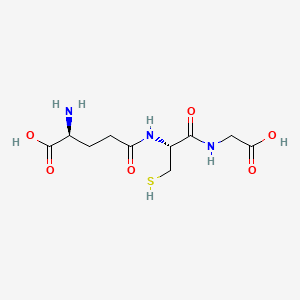
Identity & structure
Verified identifiers, sequence, and analytical properties — every value machine-readable and independently sourceable against PubChem.
Primary sequence · 3 residues.
| Identity | |
|---|---|
| CAS | 70-18-8 |
| PubChem CID | 124886 |
| FDA UNII | GAN16C9B8O |
| Also known as | GSH, L-Glutathione, Reduced glutathione, gamma-L-Glutamyl-L-cysteinylglycine |
| Research class | Secretagogue & Regulatory |
| Structure | |
| Molecular formula | C10H17N3O6S |
| InChIKey | RWSXRVCMGQZWBV-WDSKDSINSA-N |
| Sequence | γ-Glu-Cys-Gly |
| Length | 3 residues |
| Analytical | |
| Average molecular weight | 307.32 g/mol |
| Monoisotopic mass | 307.0838 Da |
| Form | Lyophilized powder |
| Solubility | Water-soluble |
| Storage | 2–8 °C, desiccated |
Where Glutathione sits in its class
Molecular weight (g/mol) across the 21 characterized compounds in Secretagogue & Regulatory. Compare all compounds →
Research context
Glutathione is a tripeptide, γ-L-glutamyl-L-cysteinylglycine, with the molecular formula C10H17N3O6S and a molecular weight of 307.32 g/mol. Its glutamate residue is joined through a γ-carboxyl linkage rather than a standard α-peptide bond. It is supplied as a characterized research material.
Supplied solely as a characterized research material. No representation is made as to any biological effect. For Research Use Only — not for human or veterinary use.
How Glutathione is identified
Identity and purity are measured, not asserted. Electrospray mass spectrometry (ESI-MS) determines the mass-to-charge ratio of the intact molecule — an observed value matching the expected series above confirms the molecular formula. Reversed-phase HPLC separates the sample over time, and purity is read as arithmetic: the target peak’s area as a share of total peak area.
Handling & stability
Physical form, storage, and solubility as supplied. Handling guidance only — no use protocols.
Related compounds
Other compounds in this research class.
Frequently asked questions
What is Glutathione?
Is Glutathione a peptide?
What is the molecular formula of Glutathione?
What is the CAS number of Glutathione?
How is the identity of Glutathione confirmed?
How should Glutathione be stored?
Is Glutathione approved for human use?
Data, tools & certificates
Research literature
Research literature — for reference only
Curated peer-reviewed references indexing the identity, characterization, and analytical-method literature for Glutathione, from the U.S. National Library of Medicine (PubMed). Listed as neutral citations only — no findings, conclusions, or use are stated or implied.
- Qualitative and quantitative analysis of glutathione and related impurities in pharmaceuticals by qNMR.
- An isocratic HPLC-UV analytical procedure for assessment of glutathione and its related substances.
- The optimised method of HPLC analysis of glutathione allows to determine the degree of oxidative stress in plant cell culture.
- Targeted Quantification of Glutathione/Arginine Redox Metabolism Based on a Novel Paired Mass Spectrometry Probe Approach for the Functional Assessment of Redox Status.
- Quantification and (13)C-Tracer analysis of total reduced glutathione by HPLC-QTOFMS/MS.
- The determination of hepatic glutathione at tissue and subcellular level.
- Measurement of S-glutathionylated proteins by HPLC.
- A rapid HPLC method for the quantification of GSH and GSSG in ocular lens.
References
- PubChem — compound identity, structure & computed properties (CID 124886). PubChem →
- CAS Registry Number 70-18-8.
- FDA Global Substance Registration System — UNII GAN16C9B8O.
Research professionals only
Glutathione — from the record to the bench
The monograph and every lot certificate stay public. Pricing and ordering open for verified research professionals.