BPC-157
BPC-157 is a synthetic 15-residue peptide, sequence GEPPPGKPADDAGLV, derived from a partial sequence identified in gastric juice and produced by solid-phase peptide synthesis.
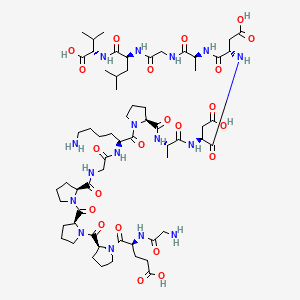
Identity & structure
Verified identifiers, sequence, and analytical properties — every value machine-readable and independently sourceable against PubChem.
Primary sequence · 15 residues.
| Identity | |
|---|---|
| CAS | 137525-51-0 |
| PubChem CID | 9941957 |
| FDA UNII | 8ED8NXK95P |
| Also known as | BPC 157, BPC157, BPC 157 peptide, Body Protection Compound 157, PL 14736, PLD-116, PL-10 |
| Research class | Regenerative & Cytoprotective |
| Structure | |
| Molecular formula | C62H98N16O22 |
| InChIKey | HEEWEZGQMLZMFE-RKGINYAYSA-N |
| Sequence | GEPPPGKPADDAGLV |
| Length | 15 residues |
| Analytical | |
| Average molecular weight | 1419.56 g/mol |
| Monoisotopic mass | 1418.7042 Da |
| Form | Lyophilized powder |
| Solubility | Water-soluble |
| Storage | 2–8 °C, desiccated |
Where BPC-157 sits in its class
Molecular weight (g/mol) across the 15 characterized compounds in Regenerative & Cytoprotective. Compare all compounds →
Research context
BPC-157 is a synthetic 15-residue peptide, sequence GEPPPGKPADDAGLV, derived from a partial sequence identified in gastric juice and produced by solid-phase peptide synthesis. Its molecular formula is C62H98N16O22, giving a molecular weight of 1419.56 g/mol. It appears in the research literature as a stable, synthetically accessible reference compound studied in in-vitro and pre-clinical models.
Supplied solely as a characterized research material. No representation is made as to any biological effect. For Research Use Only — not for human or veterinary use.
How BPC-157 is identified
Identity and purity are measured, not asserted. Electrospray mass spectrometry (ESI-MS) determines the mass-to-charge ratio of the intact molecule — an observed value matching the expected series above confirms the molecular formula. Reversed-phase HPLC separates the sample over time, and purity is read as arithmetic: the target peak’s area as a share of total peak area.
Handling & stability
Physical form, storage, and solubility as supplied. Handling guidance only — no use protocols.
Related compounds
Other compounds in this research class.
Frequently asked questions
What is BPC-157?
What is the molecular formula of BPC-157?
What is the CAS number of BPC-157?
How is the identity of BPC-157 confirmed?
How should BPC-157 be stored?
Is BPC-157 a peptide?
Is BPC-157 approved for human use?
Data, tools & certificates
Research literature
Research literature — for reference only
Curated peer-reviewed references indexing the identity, characterization, and analytical-method literature for BPC-157, from the U.S. National Library of Medicine (PubMed). Listed as neutral citations only — no findings, conclusions, or use are stated or implied.
References
- PubChem — compound identity, structure & computed properties (CID 9941957). PubChem →
- CAS Registry Number 137525-51-0.
- FDA Global Substance Registration System — UNII 8ED8NXK95P.
Research professionals only
BPC-157 — from the record to the bench
The monograph and every lot certificate stay public. Pricing and ordering open for verified research professionals.