Testagen
Testagen is a synthetic tetrapeptide, H-Lys-Glu-Asp-Gly-OH (single-letter KEDG), of L-lysine, L-glutamic acid, L-aspartic acid and glycine — a single-residue variant of Epithalon (Lys in place of the N-terminal Ala) from the St.
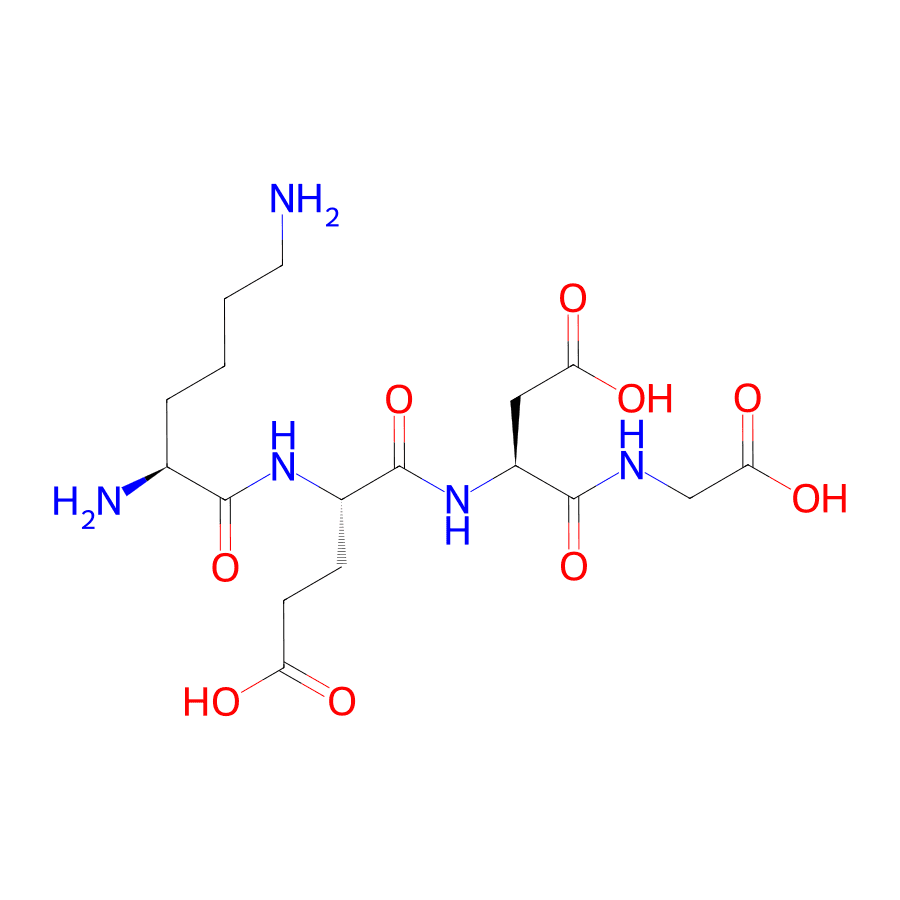
Identity & structure
Primary sequence · 4 residues.
| Identity | |
|---|---|
| CAS | 1026993-38-3 |
| Also known as | Testagen peptide, Lys-Glu-Asp-Gly, KEDG, KEDG peptide |
| Research class | Signaling & Neuroactive |
| Structure | |
| Molecular formula | C17H29N5O9 |
| Sequence | Lys-Glu-Asp-Gly |
| Length | 4 residues |
| Analytical | |
| Average molecular weight | 447.44 g/mol |
| Monoisotopic mass | 447.1965 Da (computed) |
A linear tetrapeptide, H-Lys-Glu-Asp-Gly-OH (single-letter KEDG), of L-lysine, L-glutamic acid, L-aspartic acid and glycine with free termini; it differs from Epithalon (AEDG) only at the first residue (Lys in place of the N-terminal Ala). The formula C17H29N5O9 follows from the four residues less three waters and reconciles with the sequence-derived structure (no unassigned stereocentres). Registry coverage is thin: no PubChem CID, UNII, or InChIKey is asserted here — the entity ships as ChemicalSubstance on its verified sequence and formula rather than a machine-verified key (see the identifiers report). The CAS number is provisional and single-source. A computed 3D conformer is held pending the chemist sign-off.
Reference context
Testagen is a synthetic tetrapeptide, H-Lys-Glu-Asp-Gly-OH (single-letter KEDG), of L-lysine, L-glutamic acid, L-aspartic acid and glycine — a single-residue variant of Epithalon (Lys in place of the N-terminal Ala) from the St. Petersburg (Khavinson) line of short peptide bioregulators. It is listed here strictly as an analytical reference entity — it is not sold, stocked, or certified by Lineará, and has no price or certificate of analysis. The data on this page is characterization only: molecular formula C17H29N5O9 and the values computed from it. No biological activity, mechanism, or use is described or implied.
Listed solely as a characterized analytical reference — no representation is made as to any biological effect. For Research Use Only — not for human or veterinary use.
How Testagen is characterized
Identity rests on the molecular formula and mass. Electrospray mass spectrometry (ESI-MS) measures the mass-to-charge ratio of the intact molecule; the average and monoisotopic masses are computed from the verified formula and cross-check the composition. The residue sequence and the modifications noted above define the structure.
Frequently asked questions
What is Testagen?
What is the amino-acid sequence of Testagen?
What is the molecular formula of Testagen?
What are the key chemical identifiers for Testagen?
Is Testagen a peptide?
How is Testagen stored and reconstituted?
Does Lineará sell Testagen?
Is Testagen approved for human use?
Data, tools & related references
References
- CAS Registry Number 1026993-38-3.
Research professionals only
Reference data
This monograph is characterization reference data. Lineará does not sell, stock, or certify Testagen.