KLOW
GLOW plus KPV — a research blend combining four characterized peptides. Identity & composition only.
Composition
This is a mixture — no single molecular formula. KLOW is a blend of 4separately characterized peptides, so it has no molecular formula, molecular weight, CAS number, or InChIKey of its own. Each identifier below belongs to a component and is listed on that component’s own monograph.
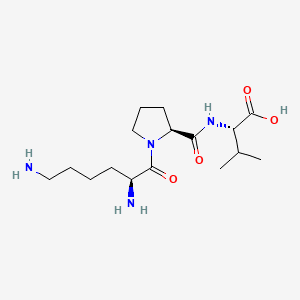
- Formula
- C16H30N4O4
- Mol. weight
- 342.44 g/mol
- CAS
- 67727-97-3
- Sequence
- Lys-Pro-Val
- Length
- 3 residues
- Class
- Regenerative & Cytoprotective
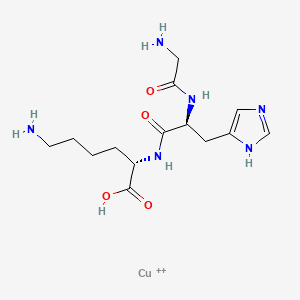
- Formula
- C14H24CuN6O4
- Mol. weight
- 403.93 g/mol
- CAS
- 49557-75-7
- Sequence
- Gly-His-Lys · Cu(II)
- Length
- 3 residues + Cu
- Class
- Regenerative & Cytoprotective
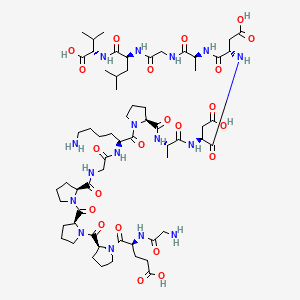
- Formula
- C62H98N16O22
- Mol. weight
- 1419.56 g/mol
- CAS
- 137525-51-0
- Sequence
- GEPPPGKPADDAGLV
- Length
- 15 residues
- Class
- Regenerative & Cytoprotective
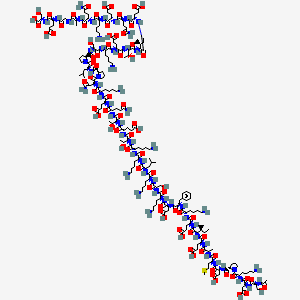
- Formula
- C212H350N56O78S
- Mol. weight
- 4963.51 g/mol
- CAS
- 77591-33-4
- Sequence
- Full-length thymosin β4 (43 residues)
- Length
- 43 residues
- Class
- Regenerative & Cytoprotective
Also known as: KLOW Blend, KLOW peptide blend, GLOW + KPV blend, GHK-Cu / BPC-157 / TB-500 / KPV blend.
The proportions of the components are not standardized across the research-peptide space. A mass partition is sometimes listed by vendors, but no ratio is canonical; Lineará references the composition, not a fixed ratio.
KLOW is GLOW plus KPV. The leading K denotes the added KPV; the name is not presented as a strict letter-by-letter acronym beyond that leading K.
How KLOW relates to GLOW
KLOW is GLOW plus one additional peptide. GLOW combines three components — GHK-Cu, BPC-157, and TB-500; KLOW adds a fourth, KPV. The leading K in the name denotes that added KPV.
Reference context
KLOW is a research-use-only peptide blend — a mixture, not a single molecule — and is defined as the three-component GLOW blend with a fourth peptide, KPV, added. Its four individually characterized research peptides are: KPV, a synthetic tripeptide (Lys-Pro-Val, the C-terminal fragment of α-MSH); GHK-Cu, a copper(II)-binding tripeptide complex; BPC-157, a synthetic 15-residue peptide; and TB-500, the full-length 43-residue thymosin β4 protein. Because it is a mixture, KLOW has no single molecular formula, molecular weight, CAS number, or structure of its own — its identity is fully defined by the identities of its four components, each of which is a separate Lineará reference monograph with its own verified identifiers. All four components fall in the same research class (Regenerative & Cytoprotective). KLOW is supplied and referenced strictly as a characterized research material; Lineará describes what is in it, not what it does.
Listed solely as a characterized research material — no representation is made as to any biological effect. For Research Use Only — not for human or veterinary use.
Frequently asked questions
What is KLOW?
What is in the KLOW blend?
Is KLOW a single molecule with its own formula and CAS number?
How does KLOW differ from GLOW?
How is KLOW different from its individual components?
Is KLOW a peptide?
How is KLOW stored and reconstituted?
Does Lineará sell KLOW?
Is KLOW approved for human use?
Components, related blends & research
References
KLOW is a mixture — its identity is the sum of its components. Each component is a separately characterized entity with its own registry identifiers.
- KPV — CAS 67727-97-3. PubChem CID 125672 →
- GHK-Cu — CAS 49557-75-7. PubChem CID 175761262 →
- BPC-157 — CAS 137525-51-0. PubChem CID 9941957 →
- TB-500 — CAS 77591-33-4. PubChem CID 16132341 →
Research professionals only
Reference data
This monograph is identity-and-composition reference data. Lineará does not sell, stock, or certify KLOW — each component is a separate Lineará entry.